19 Jul 2026
Cross-Platform Insights: Correlations Exposing Preferences in Unified Gaming Systems

Integrated gaming ecosystems now connect multiple platforms through shared user accounts and synchronized progress systems, allowing operators to compile extensive datasets that span mobile apps, desktop clients, and console environments. These unified structures generate continuous streams of interaction logs, and analysts track how players move between devices while maintaining consistent engagement patterns throughout July 2026 and beyond.
Platform Integration and Data Aggregation Techniques
Operators collect behavioral signals from each access point, then apply correlation algorithms that match session durations, game selections, and wager sizes across environments. The process begins with anonymized identifiers that link activity without exposing personal details, and researchers combine these records into unified profiles that reveal transitions from quick mobile sessions to extended desktop play. Data shows that players often start with short bursts on smartphones during commutes before shifting to longer console sessions at home, creating traceable sequences that highlight device-specific preferences within the same account.
Observed Correlations in Player Behavior
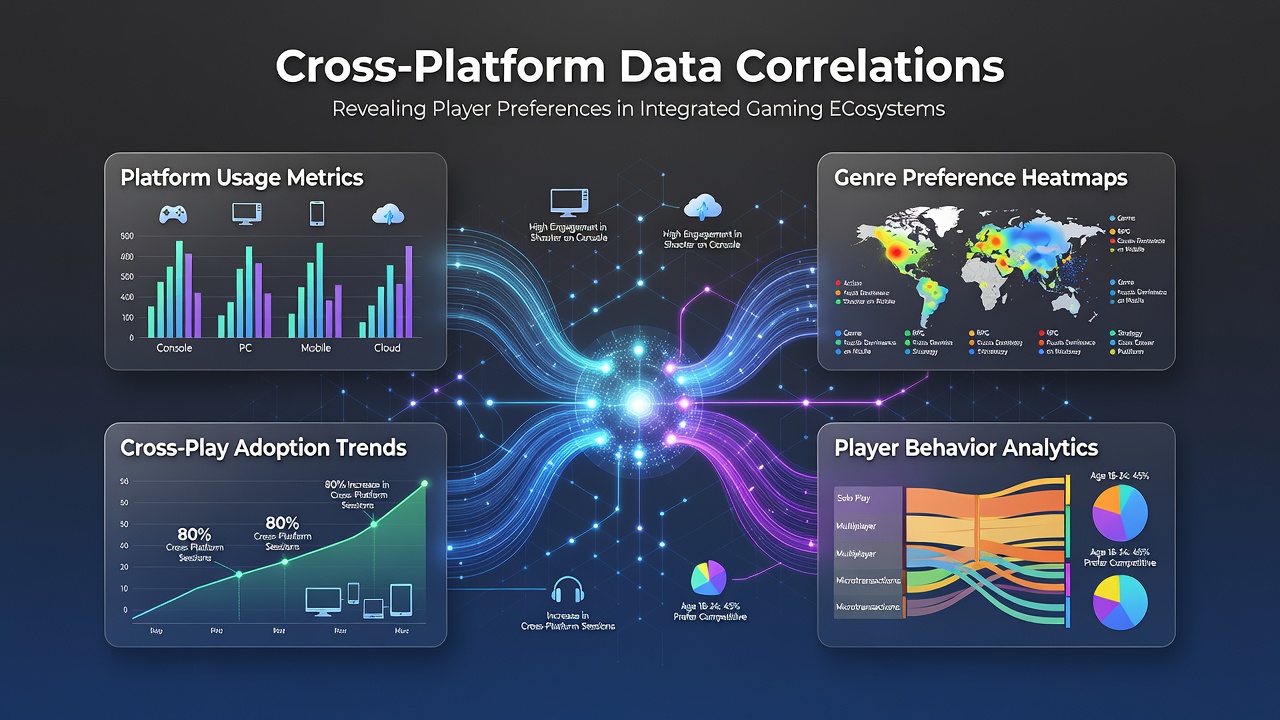
Studies of aggregated records indicate strong links between time-of-day patterns and chosen game types, with mobile access dominating early morning hours and desktop interfaces seeing higher volumes in evening blocks. Evidence from multiple ecosystems demonstrates that users who favor high-volatility slots on mobile tend to migrate toward table games when switching to larger screens, and these shifts occur consistently across regions. Figures reveal that correlation coefficients between device type and bet frequency reach notable levels when datasets span more than six months of continuous tracking.
One analysis of synchronized platforms found that players completing daily login streaks on mobile maintained higher retention rates after transitioning to console play, whereas those beginning on desktop showed steadier engagement across all devices. Such patterns emerge when algorithms process millions of session entries and isolate recurring sequences that operators later use for interface adjustments.
Regional Data Patterns and Regulatory Context
Reports from North American markets document similar cross-device flows, while Australian operators report distinct spikes in live dealer participation after initial mobile exposure. According to data released by the American Gaming Association, integrated systems captured increased multi-platform usage during the first half of 2026, with correlations pointing to preferences for progressive jackpot features that carry across devices. Canadian sources similarly note that players accessing sports wagering modules on tablets frequently return via desktop for detailed statistical reviews, establishing repeatable pathways that inform platform development.
Technical Implementation of Correlation Models
Machine learning frameworks process timestamped events alongside metadata such as screen resolution and input method, then generate predictive clusters that group users by shared movement trends. These models identify segments where mobile-first players later adopt desktop-exclusive features at predictable intervals, and operators apply the outputs to refine notification timing and content delivery. Research indicates that accuracy improves when datasets incorporate at least twelve months of longitudinal records, allowing seasonal variations to factor into the calculations.
Future Developments in Unified Tracking
Additional sensors and account-linking protocols continue to expand the granularity of available information, and developers test new correlation variables that include response latency and navigation depth. Observers note that these expansions support more precise mapping of preference shifts, particularly as ecosystems incorporate emerging hardware options in mid-2026. The resulting datasets provide operators with factual bases for adjusting game libraries and interface layouts without relying on isolated platform metrics.
Conclusion
Cross-platform correlations supply measurable evidence of how players navigate integrated gaming environments, and the documented patterns continue to guide technical refinements across operators. Continued aggregation of multi-device records maintains a factual foundation for understanding preference distributions as systems evolve through the remainder of 2026 and subsequent periods.