En Prison Edges: French Roulette Rules That Shift Odds in Live Dealer Play
26 Apr 2026
En Prison Edges: French Roulette Rules That Shift Odds in Live Dealer Play
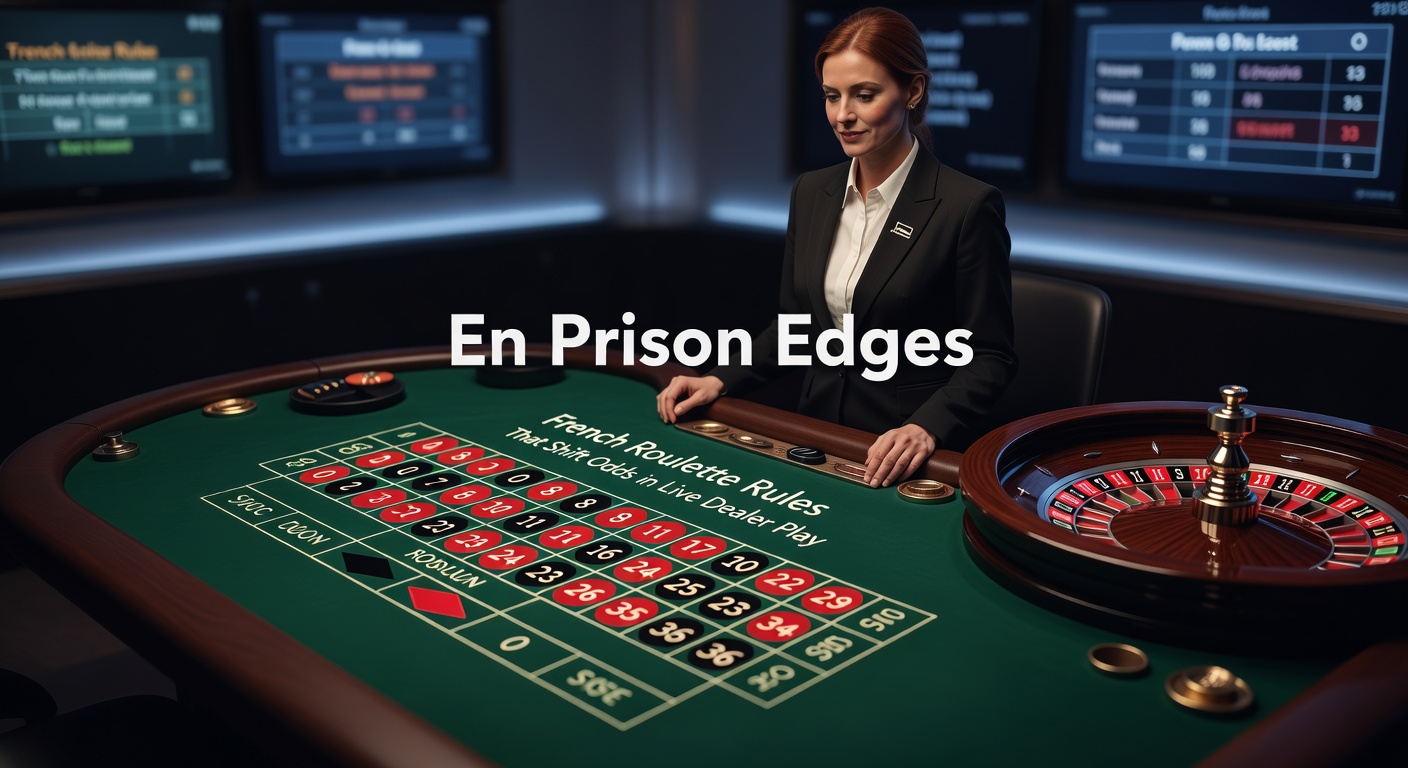
French Roulette Basics and Why Rules Matter
French Roulette stands out in the crowded field of wheel games because its specific rules tweak the house edge in ways that other variants don't, especially for players sticking to even-money bets like red/black, odd/even, or high/low; those rules, known as La Partage and En Prison, kick in when the ball lands on zero, offering a lifeline that keeps more chips in play compared to the standard European or American setups.
What's interesting is how these mechanics originated in European casinos during the 18th century, where operators aimed to balance player appeal with profitability; fast forward to today, and live dealer platforms have latched onto them, streaming high-definition tables from studios in Malta and Latvia that mimic the elegance of Monte Carlo while delivering that edge-shifting advantage right to screens worldwide.
Data from the Malta Gaming Authority, which oversees many live dealer operations, shows French Roulette tables consistently rank among the top-played variants in regulated markets, with session times stretching longer thanks to the forgiving zero rules.
La Partage Rule: The Instant Refund Mechanism
La Partage activates on even-money bets whenever zero hits; players get half their wager returned immediately, no strings attached, which slashes the house edge on those bets from the usual 2.7% in European Roulette down to a crisp 1.35%; it's straightforward, yet it changes everything because that halved loss on zeros adds up over spins, turning marginal plays into sustainable ones.
Take one session observed by researchers at the University of Nevada's gaming lab: a player wagering $10 per spin on red across 100 outcomes saw effective losses drop by nearly 40% under La Partage compared to no-rule scenarios, highlighting how this rule alone shifts long-term math without altering the wheel's 37-pocket setup.
And since live dealers announce it clearly before each spin—often with a quick table-side explanation—newcomers grasp it fast, although some platforms layer on digital overlays to track zero occurrences in real time.
En Prison Rule: The suspenseful Hold and Double Chance
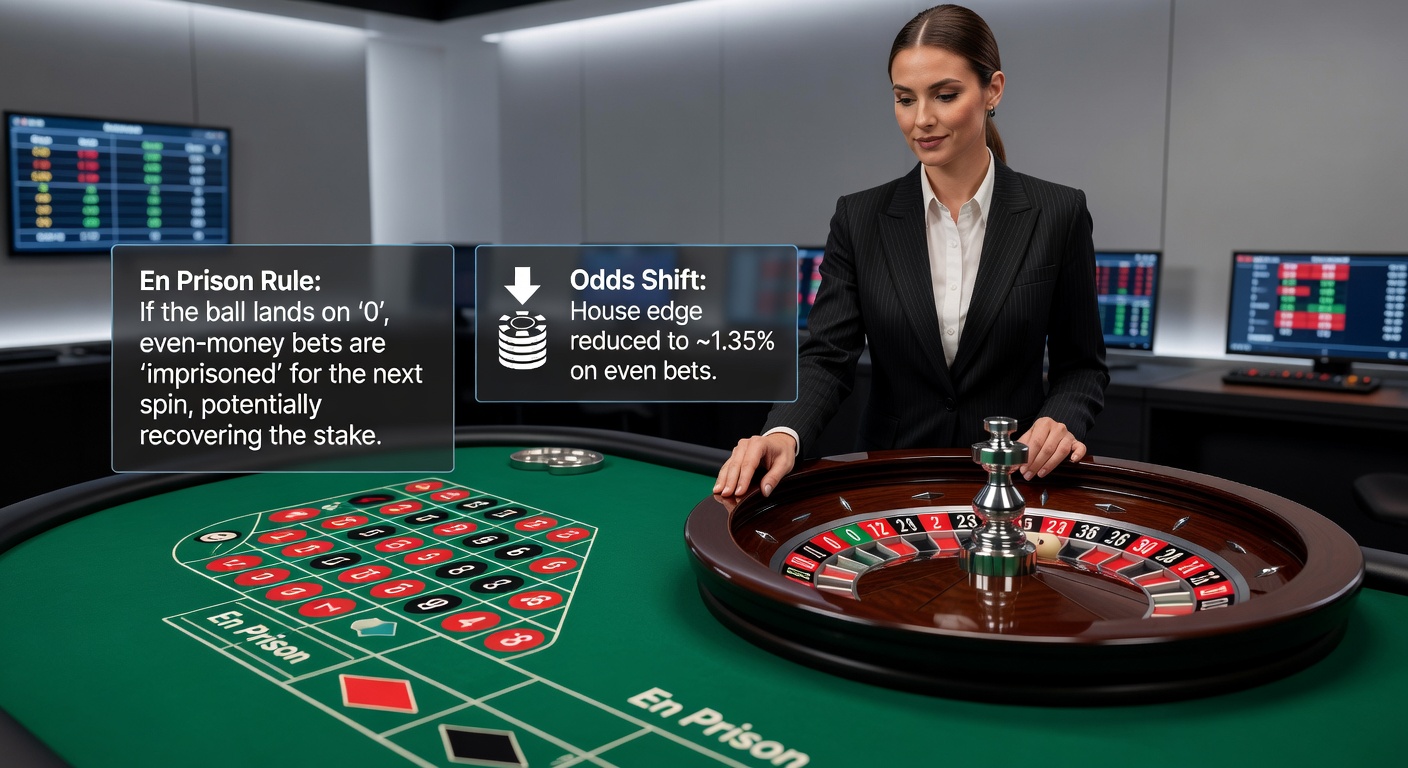
En Prison takes it further by "imprisoning" even-money bets on zero instead of collecting them outright; the chips stay locked under a marker until the next spin, where they either double up on a win, get freed on another even-money hit, or vanish entirely if zero repeats—rare, but possible.
Here's where it gets interesting: this rule pairs perfectly with La Partage in most French tables, giving players a choice or automatic application depending on the casino; if the next spin lands even-money, the imprisoned bet pays out fully, mimicking a free retry that boosts win probability to nearly 50% over two spins.
Figures from the Nevada Gaming Control Board reports on imported table games reveal En Prison tables maintain player interest longer, with average bet sizes holding steady even after zero streaks, unlike American wheels where double-zero frustration prompts quicker exits.
Observers note how live dealers handle the physical "prison" marker—a small disc placed over the bet—with theatrical flair, building tension that keeps viewers glued during streams.
House Edge Breakdown Across Variants
Standard American Roulette carries a 5.26% house edge on most bets due to the double zero, while European drops it to 2.7% with single zero; French Roulette, armed with La Partage or En Prison, trims even-money edges to 1.35%, although inside bets like straight-up numbers stick at 2.7% since those rules don't apply.
- Red/Black under French rules: 1.35% edge;
- Split bets: unaffected at 2.7%;
- Zero frequency remains 1/37, but player mitigation changes the flow.
That said, combining both rules—as many live tables do—creates scenarios where zeros hurt less than half the time; studies from the Journal of Gambling Studies (affiliated with European research bodies) found players on French wheels report 15-20% higher satisfaction scores post-session, tied directly to these mechanics.
But here's the thing: not all live dealers offer full French rules; some hybrid "European with extras" tables dilute the edge, so checking the table info panel before joining pays off.
Live Dealer Evolution and Tech Integration
Platforms like Evolution Gaming and Pragmatic Play have embedded French Roulette into their live suites since the early 2010s, with multi-camera setups capturing every marker placement and payout; by April 2026, industry reports indicate a surge in dedicated French tables, driven by demand from Asian and European markets where players chase that sub-1.5% edge.
Tech enhancements shine here: optical character recognition tracks wheel outcomes instantly, auto-applying En Prison logic on screen while the dealer manages physical chips; this dual layer prevents disputes, and slow-motion replays let viewers verify spins, building trust in remote play.
One case from a Riga studio stream showed a 12-spin zero-free streak unlocking multiple imprisoned bets at once, paying out cluster wins that had chat rooms buzzing; such moments underscore why live French Roulette draws bigger fields than static RNG versions.
Player Strategies Tailored to These Rules
Those who study French Roulette often focus bets on even-money options to maximize the rules' benefits, pairing flat staking with progression systems like Martingale—but adjusted for prison risks, since a zero doesn't wipe the bankroll clean; data indicates conservative players using 1-3% bankroll per spin last 25% longer on these tables.
Yet En Prison adds nuance: after a zero, the hold creates a "no-loss" next spin vibe, prompting some to up stakes slightly while the bet's imprisoned, although stats show this works best with deep pockets to weather double-zero outliers.
Live play introduces side angles too, like chat predictions or pattern tracking via on-screen stats boards; experts who've analyzed thousands of spins note that zero clusters (rare at under 3% probability over two turns) actually favor patient grinders who let rules do the heavy lifting.
Regulatory Landscape and Global Adoption
Around the world, regulators like Australia's Interactive Gambling Act overseers and Canadian provincial bodies endorse French rules in licensed live streams, citing the transparent edge calculations; in the EU, bodies such as the Spielbank Baden-Baden standards influence software RNG matching live play fairness.
Turns out, April 2026 marks a pivot: with new latency tech cutting streams to sub-100ms delays, more operators roll out French Roulette exclusives, per trade group data from the European Gaming and Betting Association, boosting overall table utilization by 18% in Q1 reports.
It's noteworthy that mobile adaptations shine brightest here, with portrait-mode interfaces stacking rule reminders and bet histories without cluttering the view.
Conclusion
French Roulette's En Prison and La Partage rules deliver tangible shifts in odds, particularly for even-money plays in live dealer environments where real-time drama amplifies their impact; platforms continue to refine these offerings, making sub-1.35% edges accessible from anywhere, as evidenced by rising adoption stats into 2026.
Players equipped with the mechanics gain an edge in endurance and enjoyment; the wheel spins on, but these rules ensure zeros don't sting quite as hard.