From Draw Patterns to Table Dynamics: Data Personalization in Specialized Casino Markets

Specialized casino verticals rely increasingly on detailed data mapping to tailor experiences for bingo participants and poker enthusiasts, with systems that track draw frequencies, bet sizing sequences, and session durations turning raw information into targeted adjustments. Observers note that operators in these niches collect telemetry from digital bingo cards and virtual felt tables alike, then apply clustering algorithms to identify recurring player behaviors without relying on broad demographic categories.
Bingo Draw Patterns and Frequency Mapping
Operators analyze sequences of called numbers across thousands of sessions to detect clusters where certain patterns emerge more often than statistical averages would predict, and this information feeds into real-time adjustments such as highlighting specific card layouts for individual accounts. Data from multiple jurisdictions shows that bingo platforms registered elevated engagement when personalized number suggestions aligned with historical call rates from the preceding 90 days, while platforms without such mapping recorded flatter participation curves. Researchers at institutions studying gaming analytics have documented how variance in draw timing combines with player response latency to create micro-segments that receive customized bonus triggers at precise intervals during live draws.
Systems integrate these insights with account-level metrics including average cards purchased per session and historical win rates on particular game variants, allowing the platform to surface alternative formats when a user's pattern indicates potential fatigue with standard 75-ball structures. Figures from regulatory filings in several North American markets reveal steady adoption of these mapping tools through the first half of 2026, with June reports indicating continued refinement of the underlying models.
Transitioning Insights to Poker Environments
Poker platforms extend similar logic to hand histories and table dynamics, mapping variables such as pre-flop raise frequencies, position-based aggression indices, and showdown rates into player archetypes that receive tailored table suggestions and stake recommendations. Those who study online card rooms observe that data streams from both cash games and tournament play feed into unified profiles, enabling systems to route users toward tables where opponent tendencies match the individual's historical success patterns rather than random assignment.
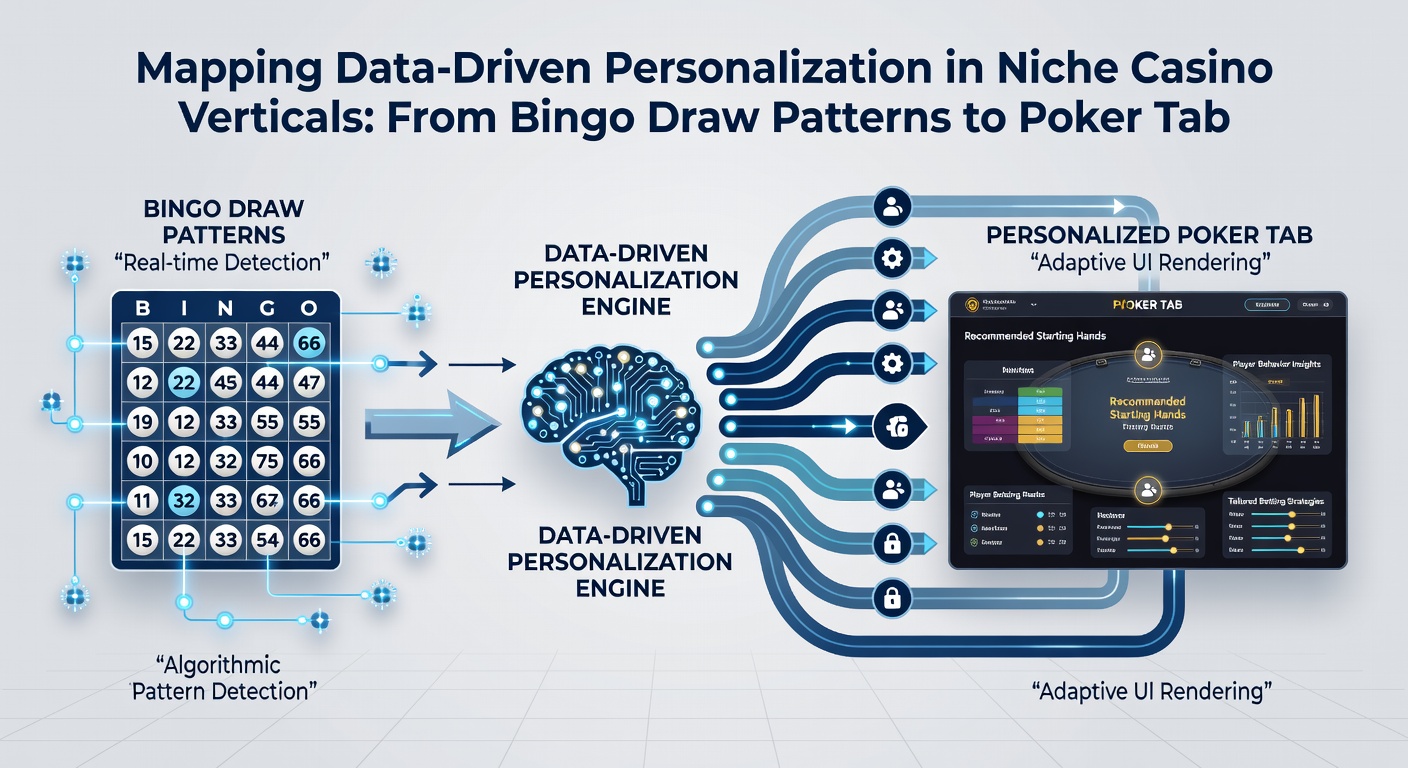
Integration occurs through shared backend architectures that compare bingo session length data against poker hand volume metrics, revealing correlations between short, high-frequency bingo play and preference for fast-fold poker variants. According to reports compiled by the Nevada Gaming Control Board, such cross-vertical mapping contributed to measurable shifts in average session value during early 2026 testing phases, while independent academic reviews from Canadian research centers have confirmed the stability of these correlations across larger sample sizes.
Technical Architecture Behind Cross-Vertical Mapping
Modern implementations rely on event-stream processing frameworks that ingest timestamped actions from bingo callers and poker dealers simultaneously, then apply graph-based models to connect seemingly disparate behaviors such as repeated number daubing patterns and river bluff frequencies. These frameworks operate with sub-second latency, updating personalization rules between rounds so that a player finishing a bingo session receives poker table invitations calibrated to their recent activity tempo rather than generic promotions.
Security protocols encrypt individual identifiers while preserving aggregate pattern visibility, satisfying requirements from multiple oversight bodies including those operating in European and Australian markets. The result is a continuous feedback loop where draw pattern data refines poker seating algorithms and vice versa, without exposing raw player records across unrelated game types.
Regulatory Context and June 2026 Developments
By June 2026, several state-level commissions had issued updated guidance on the use of behavioral mapping in niche verticals, emphasizing transparency requirements around how draw and hand data translate into interface changes. Industry associations representing platform providers documented increased investment in audit trails that log every personalization decision back to its originating data cluster, a practice now appearing in compliance submissions across multiple regions.
These developments coincide with broader adoption of sensor fusion techniques that combine traditional gameplay logs with device-level inputs, although the core mapping logic remains focused on verifiable action sequences rather than inferred emotional states. External evaluations from university-affiliated gaming laboratories continue to test the reproducibility of personalization outcomes when models trained on bingo data are applied to poker cohorts.
Conclusion
Data-driven personalization in bingo and poker verticals functions through layered mapping of draw sequences and table interactions, producing account-specific adjustments that operators refine continuously. Current implementations demonstrate measurable integration between the two formats, supported by regulatory frameworks that require clear documentation of the underlying analytics. As platforms scale these systems, the emphasis remains on verifiable pattern recognition rather than speculative projections, with ongoing contributions from both industry filings and independent research confirming the technical boundaries of such approaches.